Cloud Computing Basics for Developers: A Complete Guide
Moving a project from your local development environment to a live, global scale can easily make your head spin. You pour hours into writing and polishing your code, but the real hurdle hits when it’s time to actually host the thing. If your goal is to create resilient, highly scalable software, getting a firm grip on cloud computing basics for developers is practically mandatory.
The days of leaning entirely on traditional on-premise servers are quickly fading in our current tech climate. Businesses now expect their engineering teams to know how to tap into remote cloud infrastructure effectively. Making this jump helps teams roll out new features much faster, scale up on the fly, and significantly cut down on hardware costs.
Whether you are putting together a straightforward web app or piecing together a vast microservices architecture, modern cloud platforms offer the exact building blocks you need. Throughout this guide, we are going to unpack exactly what you need to understand to get moving. We will look at everything from the simplest deployment tactics all the way up to advanced serverless setups.
What Are Cloud Computing Basics for Developers?
What are cloud computing basics for developers? Cloud computing basics for developers revolve around learning how to deploy, host, and scale your applications using remote servers run by third-party vendors. This includes getting comfortable with foundational service models like Infrastructure as a Service (IaaS), Platform as a Service (PaaS), and Software as a Service (SaaS).
Wrapping your head around these core concepts marks the very first step in any programmer’s cloud journey. Rather than dealing with the headache of buying and wiring up physical machines, you simply rent computing power and storage exactly when you need it. Ultimately, this flexibility gives you the freedom to test out new ideas quickly without dropping a massive amount of money upfront.
Moving beyond just the service models, mastering cloud infrastructure means figuring out how to manage databases safely and setting up foundational networking. You also need to wrap your head around the shared responsibility model. Basically, this framework spells out exactly which security tasks the provider takes care of and which ones fall squarely on your shoulders.
Why This Problem Happens: The Cloud Migration Complexity
A lot of engineers run into roadblocks with cloud infrastructure simply because local environments behave so differently from distributed systems. When an app runs on your laptop, every component happily shares the same memory pool, file system, and local network. Pushing that same code to the cloud introduces a massive, and sometimes frustrating, shift in how things operate.
Suddenly, your resources are scattered across various remote servers and distinct availability zones. This kind of distributed architecture brings up tricky new hurdles, such as network latency, tough state management, and strict rules for keeping data synchronized. Almost overnight, you find yourself needing to figure out load balancers, virtual private clouds (VPCs), and complex external firewalls.
This sharp contrast is exactly what causes the dreaded “it works on my machine” scenario. Code that runs flawlessly on your own computer might completely crash in the cloud thanks to a weird permission error or a missing environment variable. Grasping essential DevOps principles is the best way to bridge this annoying gap.
Quick Fixes / Basic Solutions: Getting Started in the Cloud
If that steep learning curve has you feeling stuck, take a deep breath—you do not have to learn everything overnight. There are much gentler ways to move your applications onto the web without needing to moonlight as a senior DevOps engineer. Here are a few highly actionable steps to help you get off the ground quickly.
- Start with Platform as a Service (PaaS): Try leaning on platforms like Heroku, Vercel, or Render. Because these services hide the complex underlying infrastructure, you can usually deploy your project just by pushing code directly to a Git repository.
- Utilize Managed Database Services: Try to avoid hosting a database on a bare-bones server when you are just starting out. Instead, rely on managed options like Amazon RDS or DigitalOcean Managed Databases to automatically take care of backups, security patches, and scaling.
- Master Virtual Machines (IaaS): Spin up a basic virtual machine, like an AWS EC2 instance or a DigitalOcean Droplet. Take some time to practice SSHing into the box, setting up a web server like Nginx, and deploying a lightweight app entirely by hand.
- Use Managed Object Storage: Break the habit of saving user-uploaded files directly to your application server’s local hard drive. Incorporate object storage tools like Amazon S3 or Cloudflare R2 so your files safely carry over between new deployments.
Advanced Solutions: Architecting for the Cloud
After you feel comfortable with the basics, you can start designing robust, highly available systems. Stepping up to advanced cloud architectures lets you automate your infrastructure and build environments that can handle massive growth. Naturally, this requires shifting your mindset toward developer-centric operations and embracing modern architectural patterns.
- Containerization with Docker: Wrap your application and all of its unique dependencies inside isolated Docker containers. Doing this virtually eliminates the “it works on my machine” headache because the environment remains perfectly consistent from local testing all the way to production.
- Container Orchestration: Turn to tools like Kubernetes or AWS ECS when you need to manage dozens or hundreds of active containers. These powerful orchestrators work behind the scenes to handle auto-scaling, self-healing processes, and seamless zero-downtime updates.
- Serverless Architecture: Dive into serverless computing using services like AWS Lambda or Google Cloud Functions. You essentially write standalone functions that only execute when triggered, which means you pay absolutely nothing while your code is sitting idle.
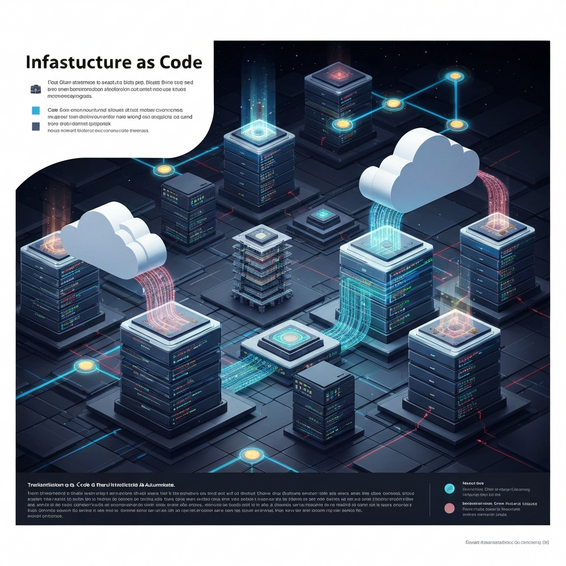
- Infrastructure as Code (IaC): Move away from manually clicking through endless cloud provider dashboards just to spin up a server. Adopt tools like Terraform or AWS CloudFormation so you can define and manage your entire infrastructure through version-controlled code.
Keep in mind that putting these advanced techniques into practice usually means setting up a continuous integration pipeline. Automation truly acts as the backbone for any reliable, highly scalable cloud deployment.
Best Practices for Cloud Optimization and Security
Pushing your code live is really only the beginning of the journey; keeping that environment secure and cost-efficient is a continuous effort. A poorly configured server setup can easily result in shocking monthly bills or, even worse, severe data breaches. Sticking to proven industry standards is the best way to keep your infrastructure both stable and safe.
- Enforce the Principle of Least Privilege: Rely heavily on strict Identity and Access Management (IAM) roles. Make sure you only give your apps and team members the exact permissions necessary to do their specific jobs—nothing more.
- Build Stateless Applications: Try to design your servers so they do not hold onto any local session data. By keeping that state in an external database or a blazing-fast caching layer like Redis, you can safely spin application servers up or down without losing user data.
- Implement Comprehensive Monitoring: Do not wait for things to break before setting up proper logging. Integrate platforms like Datadog, CloudWatch, or Grafana from day one so you can track performance and spot weird errors long before your users complain.
- Set Up Billing Alerts: Always, always configure budget alarms within your provider’s dashboard. This incredibly simple step will save you from financial ruin if a rogue serverless function gets caught in an infinite loop or you get hit by an unexpected wave of traffic.
While you are at it, it is worth taking the time to explore database optimization techniques to guarantee your managed databases run smoothly even under heavy workloads.
Recommended Tools and Resources
Picking out the right toolset can make your jump into cloud computing feel a lot less intimidating. You definitely do not need to reinvent the wheel here. Instead, take advantage of these established platforms to speed up your daily development workflow.
- Amazon Web Services (AWS): As the heavyweight champion of the industry, AWS offers a massive free tier that is fantastic for beginners. Try starting with EC2 for basic virtual machines or AWS Lambda for running serverless functions.
- DigitalOcean: We highly recommend this platform for developers who prefer straightforward, highly predictable pricing. Their Droplets and App Platform are excellent choices for launching startup ideas or hosting personal portfolio projects.
- Terraform: This is widely considered the gold standard for Infrastructure as Code (IaC). It gives you the power to configure and manage resources across multiple different cloud providers using one unified syntax.
- Docker: This remains the absolute undisputed king of containerization. Anyone working in modern software development should know how to write a basic Dockerfile and spin up local services using Docker Compose.
Frequently Asked Questions (FAQ)
What is the difference between IaaS and PaaS?
IaaS (Infrastructure as a Service) hands you the raw computing power—like a bare virtual machine—but leaves you responsible for managing the operating system, security patches, and runtime environments. PaaS (Platform as a Service) handles all that under-the-hood maintenance for you, freeing you up to focus entirely on writing and deploying your application code.
Do developers need to learn DevOps?
Absolutely. While nobody expects you to become a full-time system administrator, having a working knowledge of basic DevOps principles is expected these days. Understanding how CI/CD pipelines function, how to use containers, and the basics of cloud security will make you a much more versatile and employable software engineer.
Is serverless computing actually serverless?
Not at all—there are definitely still physical machines running your code somewhere in a data center. The term “serverless” just means the cloud provider is handling all the server allocation, maintenance, and scaling completely out of sight. As the developer, you simply write the code and never have to touch an operating system configuration.
Conclusion
Figuring out the ins and outs of modern web hosting does not have to be a miserable experience. By zeroing in on core concepts like managed services, containerization, and safe security practices, you can move your applications into production with confidence. Mastering these cloud computing basics for developers will give you the exact skills the industry is looking for to build tough, scalable software.
Try starting small. Deploy a basic side project to a PaaS provider or play around with an entry-level virtual machine. As your confidence grows, you can start experimenting with container orchestration tools and Infrastructure as Code. With a bit of consistent practice, you will easily evolve from a developer who only builds locally to a highly capable cloud architect.
About the Author