How to Build AI Blog Automation with n8n (Step-by-Step Guide)
Let’s face it: content might be the driving force behind modern SEO, but churning out high-quality technical articles day after day is downright exhausting. Between the writing, formatting, and manual publishing, the whole process can quickly eat up your valuable time and drain your budget. That’s exactly where modern automation platforms come into play, offering a way to completely revolutionize your publishing lifecycle.
If you have ever felt buried under an endless mountain of content demands, trust me, you are not alone. Countless developers, marketers, and SEO professionals are constantly on the hunt for smarter, more efficient ways to scale their editorial output. Learning exactly how to build AI blog automation with n8n might just be the ultimate solution you need to cut out those tedious, repetitive tasks and finally streamline your day-to-day operations.
In this comprehensive guide, we are going to walk through the process of designing an end-to-end automated blogging system. By the time we are done, you will know exactly how to connect various APIs, harness the power of large language models, and seamlessly push perfectly formatted drafts straight into your content management system.
How to Build AI Blog Automation with n8n: Why This Problem Happens
The biggest hurdle with handling content generation the old-fashioned way is just how fragmented the modern editorial lifecycle has become. Think about what it takes to publish just one single post. A writer has to dive into keyword research, sketch out a solid outline, write the actual draft, format everything into clean HTML, source or generate a featured image, and then fumble through the WordPress backend to get it live.
All of these separate steps create a massive technical bottleneck. As your website scales up, the sheer volume of manual clicking and typing puts a hard speed limit on how fast you can publish. Writers inevitably get burned out, and constantly bouncing between distinct tools—like jumping from ChatGPT to Google Docs and then over to WordPress—naturally introduces friction and annoying copy-paste errors.
To make matters worse, running a genuinely efficient content pipeline means you have to bridge the gap between entirely disconnected data silos. Since these platforms do not inherently talk to one another, scaling your output leaves you with two realistic choices: either hire a massive (and expensive) editorial team, or implement robust automation strategies to do the heavy lifting for you.
Quick Fixes / Basic Solutions for Automated Blogging
Before we dive headfirst into overly complex architectures, it is usually best to get your feet wet with some basic automated blogging workflows. By stringing together a few simple n8n nodes, you can get a comfortable feel for how the platform works while scoring some immediate time savings right out of the gate.
- RSS Feed to Draft: Hook up an RSS Read node so you can keep an eye on industry news. Whenever the node detects a new article, it passes the headline straight to an OpenAI integration to spin up a brief, uniquely written summary.
- Email Trigger Creation: Set up an IMAP email trigger node for on-the-go creation. You just send an email where the subject line is your target keyword. From there, your n8n workflow catches it, drafts a solid 500-word post, and automatically emails the finished text right back to your inbox.
- Google Sheets to WordPress: Build a simple spreadsheet packed with your target SEO blog titles. By using the Google Sheets node, you can automatically pull one new row each day, feed that title into ChatGPT to write the draft, and then save the output as a clean text file directly inside Google Drive.
Think of these simpler setups as the fundamental building blocks of your AI content generation strategy. They offer a hands-on way to master basic data mapping, teaching you exactly how to pass JSON variables securely and smoothly from one node to the next.
Advanced Solutions: The Ultimate n8n AI Workflow
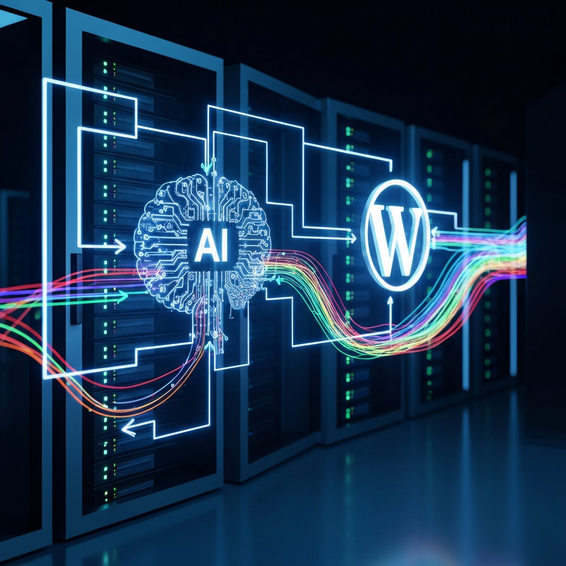
If you are looking for a true production-grade setup, you are going to need a highly structured n8n workflow—one that effectively mimics a human editorial team. This more advanced approach steps away from single, basic prompts and instead leans on powerful API integrations to assemble a comprehensive, fully formatted article that is completely ready to hit publish.
Step 1: Setting Up the Trigger and Webhook
The whole process kicks off by configuring either a Webhook node or a Schedule node. If you want a hands-off, autonomous system that publishes daily, the Schedule node is your best friend. On the flip side, if you would rather generate content on demand, a Webhook lets you fire off the workflow anytime simply by sending an HTTP POST request loaded with your target keyword.
Step 2: Connecting the OpenAI Integration
Once the trigger fires, your workflow hands that keyword over to an OpenAI node. But here is the secret to getting great quality: instead of relying on one massive prompt, break the job down into multiple steps. First, have the AI outline a comprehensive, SEO-friendly structure. Then, feed that newly minted outline into a second OpenAI node to actually write the bulk of the article.
Chopping the generation process into these smaller, digestible steps does wonders for reducing wild AI hallucinations. Plus, it gives you the perfect opportunity to inject highly specific system instructions, ensuring the final text perfectly matches your brand voice while strictly outputting clean HTML formatting.
Step 3: Generating the Featured Image
We all know that visuals are an absolute must for strong SEO and keeping users engaged. To handle this, simply route your newly generated article title straight over to the DALL-E 3 API using an HTTP Request node. From there, you can instruct the AI to whip up a beautiful, highly relevant featured image tailored perfectly to your topic.
The moment that image is generated, n8n can pull the file directly into your workflow. Next, pass it through the WordPress REST API to upload the visual right into your Media Library. Doing this allows you to grab the image’s Attachment ID, which is a crucial piece of the puzzle for the final publishing stage.
Step 4: Publishing via WordPress REST API
Now it is time to bring all the moving parts together. Grab the standard WordPress node and set it to create a brand new post. You will want to map your perfectly formatted HTML into the main content block, drop your keyword into the title field, and finally attach that uploaded image ID so it populates as the official featured image.
Best Practices for Your Content Creation Pipeline
Automation is undeniably powerful, but letting an AI blog run completely unchecked is a fast track to mediocre content and frustrating SEO penalties. If you want to maintain a high standard of quality, implementing a few strict best practices is absolutely essential.
- Human-in-the-Loop Setup: Make it a rule to configure your n8n workflow so it saves posts as “Drafts” rather than pushing them straight to “Published.” This builds in a buffer, giving a real human editor the chance to fact-check the piece, sprinkle in personal anecdotes, and ensure it hits all the right EEAT signals.
- Implement Rate Limiting: Do not forget to use the Wait node to add brief pauses between your API calls. Hammering the OpenAI or WordPress REST APIs too aggressively is a surefire way to trigger annoying timeouts or get your IP temporarily banned.
- Refine Your Prompts: Take the time to genuinely engineer your prompts. Tell ChatGPT explicitly to skip over those repetitive, robotic transition phrases. You should also request punchy, short paragraphs and plenty of bulleted lists to keep the final text highly readable.
- Error Handling: Things break; it is just the nature of technology. Utilize the Error Trigger node to catch any random workflow failures as they happen. You can easily set up an alert that pings your Slack channel the second a WordPress upload happens to fail.
Recommended Tools and Resources
To get this pipeline up and running smoothly, you are going to need access to a handful of specific platforms and hosting environments. Think of the following list as the ultimate modern developer stack for WordPress automation.
- n8n Automation: You have two main choices here: spin up n8n Cloud for a super quick deployment, or take the DIY route and self-host it via Docker so you can enjoy unlimited workflow executions.
- Cloud Hosting: If you do decide to self-host n8n, you will need a reliable server. Platforms like DigitalOcean, Hetzner, or Linode offer fantastic VPS options that won’t break the bank. (Affiliate link placeholder)
- OpenAI API: You will absolutely need a paid developer API account to get your hands on the powerful GPT-4o and DALL-E 3 models.
- WordPress Application Passwords: Head into your WordPress user profile and generate a dedicated Application Password. This lets you securely authenticate all of your API requests without ever exposing your actual admin password.
FAQ Section
Is n8n better than Zapier for AI automation?
For technical users, the answer is a resounding yes. While Zapier is incredibly beginner-friendly, n8n brings a lot more firepower to the table with features like complex branching logic, fully custom HTTP requests, and granular error handling. On top of that, choosing to self-host n8n means you can run an unlimited number of tasks essentially for free, making it way more cost-effective in the long run.
How much does an automated AI blog cost to run?
Your main expenses are going to boil down to your server hosting and your usage of the OpenAI API. Amazingly, having GPT-4o draft a full 1,200-word article usually costs mere cents. If you self-host your n8n setup on a reasonably priced VPS, you could easily generate hundreds of high-quality blog posts every single month for under $20 total.
Will Google penalize AI-generated blog posts?
The short answer is no, because Google ultimately rewards high-quality content, no matter who—or what—wrote it. As long as your automated posts deliver genuine value to the reader, perfectly match search intent, and go through a thorough human editing process, they have every opportunity to rank well. Just steer clear of blindly publishing raw, unedited AI text.
Conclusion
At the end of the day, successfully scaling a website’s traffic demands a consistent, reliable output of content. Relying purely on manual writing just can no longer keep pace with the aggressive demands of modern SEO. But by intelligently leveraging APIs, webhooks, and advanced prompting techniques, you can completely transform your editorial process from a sluggish bottleneck into an agile, incredibly productive content machine.
Now that you understand exactly how to build AI blog automation with n8n, the only thing left to do is take action. Start small. Set up a basic draft generator to get the hang of things, slowly refine your system prompts, and then gradually introduce fancier features like image generation and direct-to-WordPress publishing. With a thoughtfully structured pipeline running in the background, you will free up countless hours—giving you the time and energy you need to focus on big-picture growth and strategy.
About the Author